


As the calendar turns to December, the conventional wisdom in real estate is to "wait for spring." Homeowners are typically told that no one buys homes during the holidays, that lowball offers are the norm, and that moving in the snow is a nightmare.
But 2025 is not a conventional year.
We are currently witnessing a unique convergence of high home equity, rising consumer debt, and a scarcity of housing inventory. For homeowners looking to unlock cash without disrupting their lives, the holiday season, specifically when paired with a "Sale-Leaseback" strategy, might actually be the most profitable window of the year.
Here is your guide to navigating the winter market, understanding the 2026 economic outlook, and leveraging platforms like Sell2Rent to sell your home while staying put.
1. The Myth of the "Bad" Winter Market
The idea that the real estate market freezes over in winter is a myth that actually benefits savvy sellers. While it is true that overall transaction volume drops, the quality of the market often improves for sellers who stay the course.
Less Competition, More Visibility
Inventory levels in many markets drop by 30% to 40% during the winter as casual sellers pull their listings to avoid holiday interruptions. This creates a supply vacuum. In the spring, your home is one of dozens; in December, it may be the only one available in your neighborhood. This scarcity leads to increased visibility and, frequently, a higher offer-to-view ratio.
The "Must-Buy" Demographic
Winter buyers are not "tire kickers." They are motivated by hard deadlines.
- Corporate Relocations: January is often a peak month for new job starts, forcing transferees.
- Tax Deadlines: Investors and high-net-worth buyers often rush to close properties before December 31st to crystallize tax benefits for the fiscal year.
- Life Events: Divorce settlements, estate liquidations, and family changes often require year-end resolutions.
As industry experts note, listing in winter attracts "serious buyers only", filtering out the casual browsers who waste your time.
2. The Liquidity Trap: Why Sell Now?
While your home value has likely risen, your wallet might be feeling the pinch. As we head into 2026, homeowners are sitting on record levels of equity, yet many are "house poor."
The Debt Reality
Data shows that nearly 70% of homeowners expect to carry holiday credit card debt into 2026, adding to an already staggering $1.23 trillion in national credit card debt. With interest rates on unsecured debt hovering near 20% or more, holding onto a home with "lazy equity" while paying high interest to creditors is a losing financial strategy.
The 2026 Rate Forecast
If you are waiting for mortgage rates to crash back to 3% before you make a move, you will be waiting a long time. Major forecasts for 2026 predict that 30-year fixed rates will stabilize in the 6.0% to 6.6% range.
Furthermore, home price appreciation is expected to slow to a modest 1.2% in 2026. This means the "cost of waiting" (property taxes, insurance, maintenance, and heating bills) will likely eat up any small gains in home value you might see by waiting until spring.
3. The Sell2Rent Advantage: Selling Without the Snow
The biggest deterrent to a winter sale isn't the price, it's the move. Moving in ice, snow, and freezing temperatures is dangerous and expensive.
This is where the Sell-to-Rent (Sale-Leaseback) model changes the game.
How It Works
Instead of listing your home on the open market, dealing with open houses, and moving out on closing day, you sell your home to an investor and immediately sign a lease to stay as a tenant.
- Unlock Your Equity: You get the cash from the sale to pay off debts, invest, or prepare for retirement.
- Zero Moving Logistics: You stay in your home. No packing boxes during the holidays, no changing school districts mid-year.
- Investor Appetite: Investors love this model in December because they buy a stabilized asset with a tenant (you) already in place, eliminating their vacancy risk.
The "As-Is" Bonus
Preparing a home for a traditional retail sale in winter is brutal. You can't plant flowers for curb appeal when the ground is frozen. Sell2Rent investors typically buy properties "as-is," meaning you don't have to paint, repair the roof, or stage the living room. You save the cash you would have spent on repairs and skip the headache entirely.
4. Tax Strategy: The December 31st Deadline
Timing your sale can have significant tax implications.
- Capital Gains Exclusion: Under(https://www.irs.gov/taxtopics/tc701), if you have lived in your home for two of the last five years, you can exclude up to $250,000 (single) or $500,000 (married) of capital gains from taxes.
- Year-End Planning: Closing before year-end allows you to finalize your 2025 tax liability. If you expect your income to rise significantly in 2026, locking in the sale now might keep you in a lower tax bracket for any capital gains exceeding the exclusion limits.
5. Summary: The Holiday Checklist
If you are considering a move, financial or physical, here is why acting before January 1st makes sense:
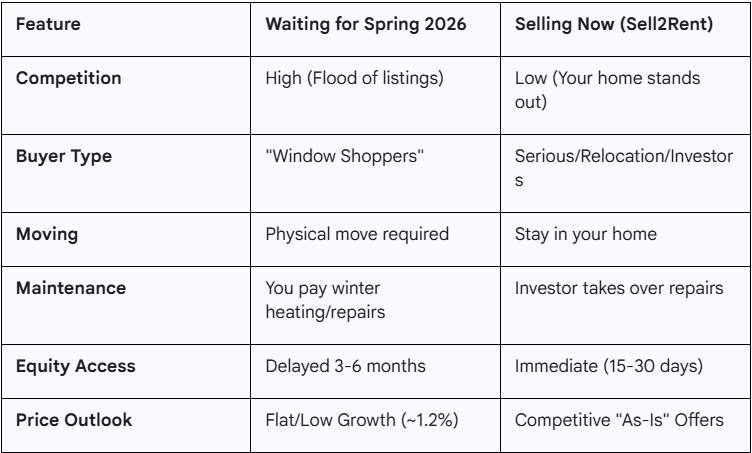
The Bottom Line:
The holiday season shouldn't be a time of financial stress. By leveraging a sale-leaseback, you can liquidate your home's equity to clear your balance sheet, avoid the hassle of a winter move, and enter 2026 with cash in hand.
Ready to see what your home is worth to an investor?

Real estate innovator and Managing Partner at PIA Residential and Sell2Rent, boasting over 20 years of experience and 2,000+ units acquired. A Wharton MBA and Forbes contributor, he brings institutional-grade authority to every market insight he shares. Danny’s expertise is further validated by his role on the Planning and Zoning Board for the City of Hallandale, where he helps shape the local landscape. For readers seeking credible, battle-tested advice, Danny offers the perspective of a leader who has successfully navigated decades of market cycles.
Oops! Something went wrong while submitting the form.
Thank you! Your submission has been received!
Oops! Something went wrong while submitting the form.
Subscribe to the Real Estate Digest. Weekly newsletter.