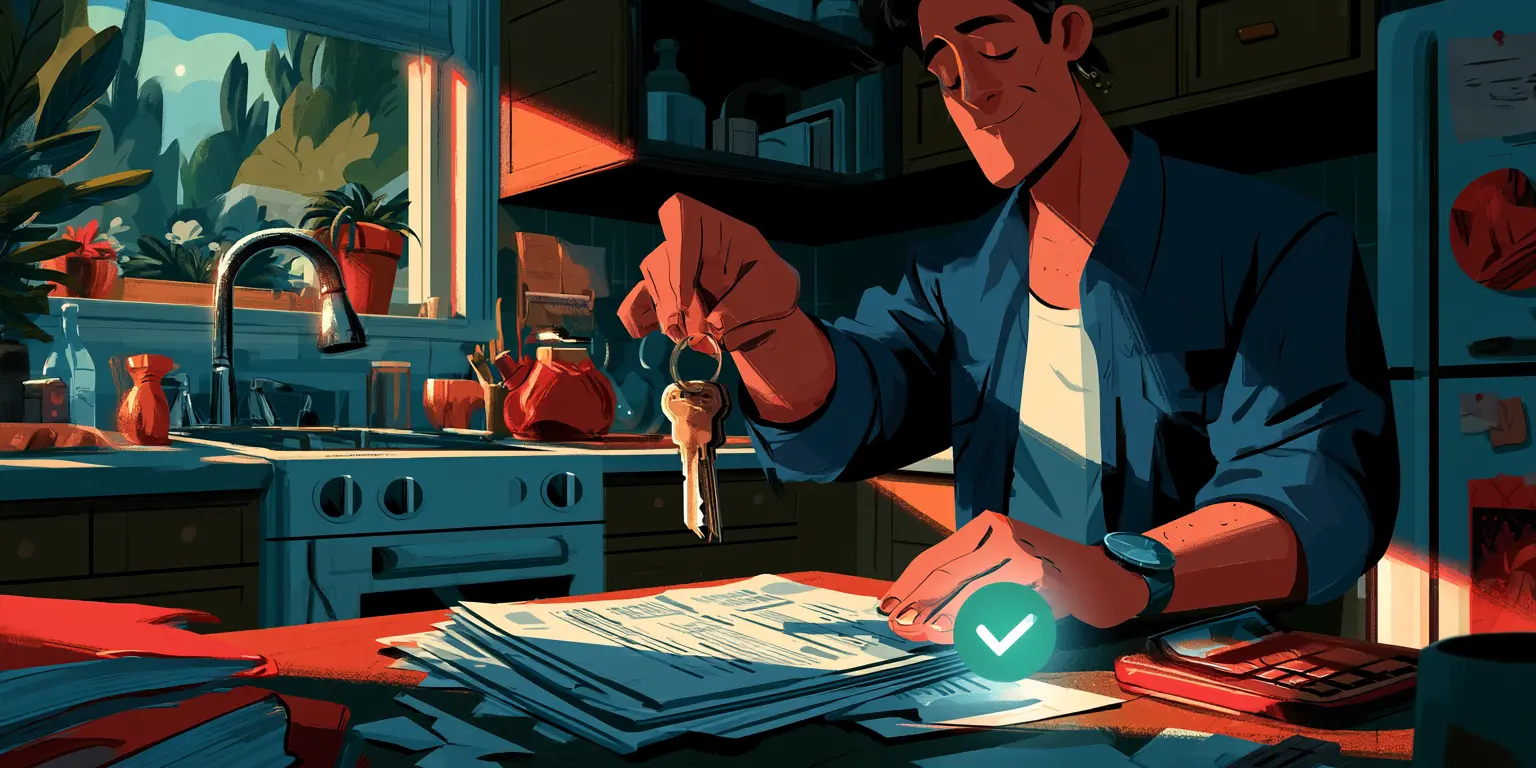



If you've recently completed (or are considering) a sale-leaseback, you likely have one very practical question: now that someone else owns the home, do you still have to deal with property taxes?
The answer is no. As a renter under a leaseback agreement, you are not legally responsible for property taxes. That obligation belongs to the property owner. But understanding the full picture protects you from surprises at renewal, and helps you negotiate from a position of clarity.
Understanding Property Taxes in a Leaseback
In a sale-leaseback, you trade the legal burdens of homeownership (property taxes, insurance, and maintenance) for the stability and flexibility of renting, while keeping the home you love.
The moment your sale-leaseback closes and the deed transfers to the investor-buyer, the property tax obligation transfers with it. You remain in the home. Your neighborhood stays the same. But the county tax bill? That now goes to someone else entirely. Learn what a sale-leaseback is and how it works ↗
Who Legally Owes Property Taxes?
Property taxes are assessed against the legal owner of record, the person or entity whose name is on the deed. Once your sale-leaseback closes and the deed transfers to the investor buyer, that individual or company becomes the property tax obligor.
This is true regardless of whether you're still living in the home. The county assessor looks at ownership, not occupancy, when sending the tax bill.
What Your Lease Agreement Actually Says
While the law is clear that property taxes belong to the owner, lease agreements can include language that shifts some costs, at least indirectly. Here's what to watch for:
Gross Lease vs. Triple Net (NNN) Structures
Most residential leasebacks use a gross lease: you pay a fixed monthly rent and the landlord handles all ownership costs including property taxes, insurance, and structural repairs.
A triple net (NNN) lease passes tax, insurance, and maintenance costs to the tenant. This structure is standard in commercial real estate and unusual in residential leasebacks, so always read the fine print.
Before signing any leaseback agreement, ask directly: "Is this a gross lease?" If property taxes are not explicitly your responsibility under the written lease, they belong to the owner, not you.
Can Property Taxes Affect Your Rent?
Indirectly, yes. Investors price rental rates partly based on total cost of ownership, which includes property taxes, insurance, and financing. If taxes rise significantly after the property is reassessed at its new sale price, a landlord may seek higher rent at the next lease renewal.
This is why leaseback tenants should negotiate for fixed rent terms or clear escalation caps. At Sell2Rent, leaseback agreements are structured with rent stability in mind, so you know exactly what you'll pay, even as the market shifts. Learn how a Sell2Rent leaseback works ↗
Homestead Exemptions: What Happens After a Leaseback?
In most states, the homestead exemption is tied to the owner-occupant, not the occupant alone. When you sell and become a renter, you generally lose eligibility. The new investor owner typically cannot claim it either, since the property is an investment, not their primary residence.
This means the overall tax bill on the property may increase after the sale, something investors factor into their pricing. As a tenant, this shift doesn't affect you directly, but it can inform rent discussions at renewal.
Key insight: You no longer need to manage homestead exemption applications, tax appeals, or assessment disputes. Those are now the investor's responsibility, and their financial exposure to manage.
Property Tax Reassessment After a Sale
In many states, when a property sells, the county reassesses it at the new sale price. This can result in a significant jump in the annual tax bill, sometimes thousands of dollars more per year.
States like California (Proposition 13), Michigan, and Florida limit how quickly assessed value rises for long-term owners. But once a property sells, those protections often reset, and the new owner faces taxes based on the full purchase price.
As a leaseback tenant, this is the investor's financial exposure. Your rent is set by your lease, not the county assessor.
How Much Do Leaseback Tenants Actually Save?
Let's put real numbers to this. When you transition from homeowner to leaseback tenant, you stop paying for several major ownership costs beyond just property taxes. Here is what the average U.S. homeowner was paying annually before a leaseback:
That is up to $11,742 per year in ownership costs that transfer to the investor the moment your leaseback closes. That is nearly $980 per month, and it does not include the mental load of managing repairs, disputing assessments, or tracking insurance renewals.
Even after accounting for rent, many leaseback tenants find their total monthly housing outlay stays flat or decreases, while their financial flexibility and peace of mind increase significantly.
The goal of a leaseback is not just to stay in your home; it is to simplify your financial life. For many families, eliminating these bills is worth as much as the equity they unlock.
Tax Benefits You've Actually Gained as a Renter
As a homeowner, your tax-related responsibilities included:
- Annual property tax payments, often escrowed but always a real cost
- Risk of reassessment increases and dispute processes
- Potential tax liens if payments were missed
- Homestead exemption applications and annual tracking
As a leaseback tenant, your tax to-do list is zero items long. Your rent check covers your housing obligation in full.
And the equity you unlocked through the sale? It can go to work in ways that carry their own tax advantages: retirement accounts, diversified investments, and more.
What to Ask Before Signing a Leaseback
Whether you're working with Sell2Rent or evaluating any leaseback arrangement, these are the right questions to ask about taxes and costs:
- Is this a gross lease? (You should not be paying taxes, insurance, or major repairs)
- What is the rent escalation schedule? (Know your exposure to future increases)
- How long is the initial lease term? (Longer terms provide more stability)
- Are there any pass-through costs for capital expenses or special assessments?
- Can I renew, and at what terms?
A well-structured leaseback should feel like renting your home, not maintaining it. If a contract asks you to carry ownership costs without ownership benefits, it's worth renegotiating.
The Bottom Line
Do renters pay property tax? No. The property owner does. In a sale-leaseback, once the deed transfers to your investor-buyer, the property tax obligation transfers with it. Your monthly rent covers your housing costs, full stop.
Watch for: gross lease vs. NNN structures, rent escalation clauses, and how property tax reassessments might influence future rent negotiations. These are manageable, knowable factors, not surprises, if you ask the right questions upfront.
Understanding the financial architecture of your leaseback is part of what makes it work for you. And that's exactly what Sell2Rent is built to support. Get a no-obligation offer today ↗
Real estate innovator and Managing Partner at PIA Residential and Sell2Rent, boasting over 20 years of experience and 2,000+ units acquired. A Wharton MBA and Forbes contributor, he brings institutional-grade authority to every market insight he shares. Danny’s expertise is further validated by his role on the Planning and Zoning Board for the City of Hallandale, where he helps shape the local landscape. For readers seeking credible, battle-tested advice, Danny offers the perspective of a leader who has successfully navigated decades of market cycles.
Oops! Something went wrong while submitting the form.
Thank you! Your submission has been received!
Oops! Something went wrong while submitting the form.
Subscribe to the Real Estate Digest. Weekly newsletter.